Last updated November 21, 2026
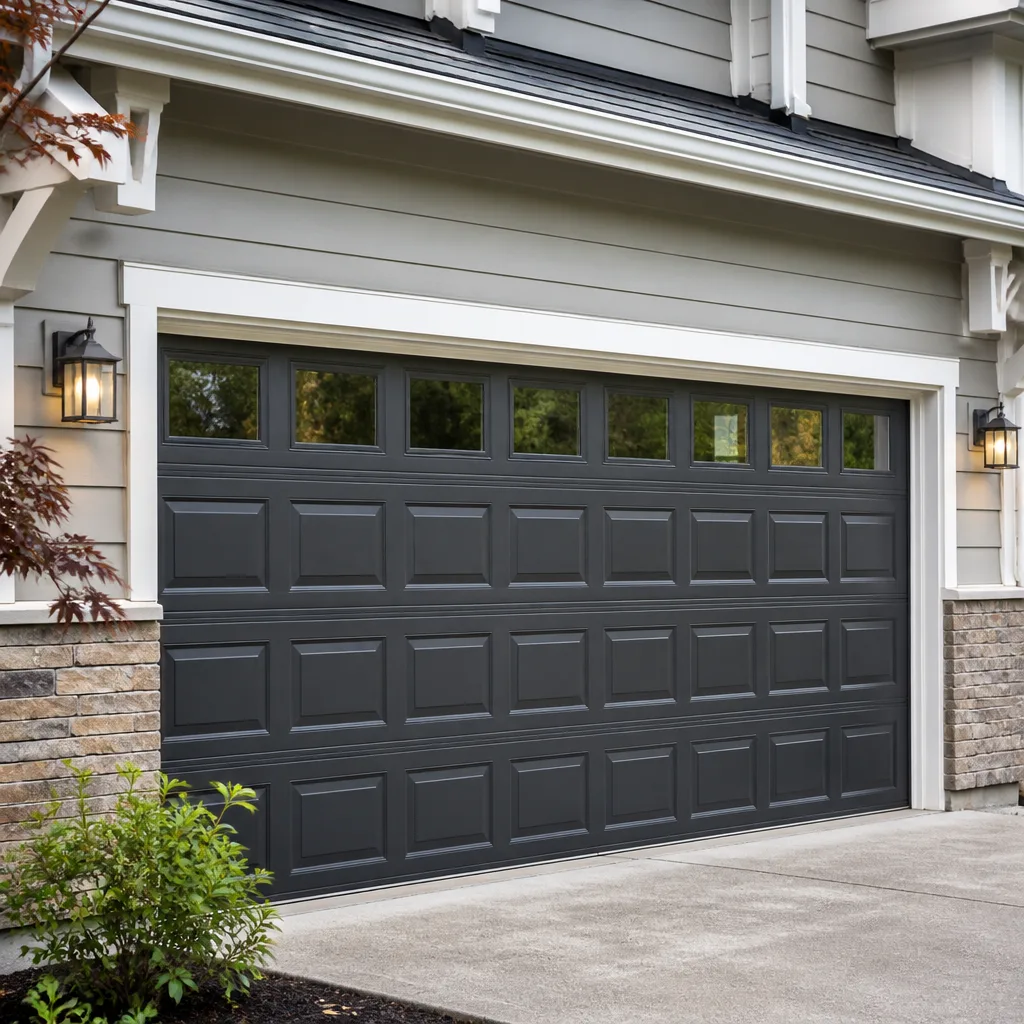 Raised-panel steel
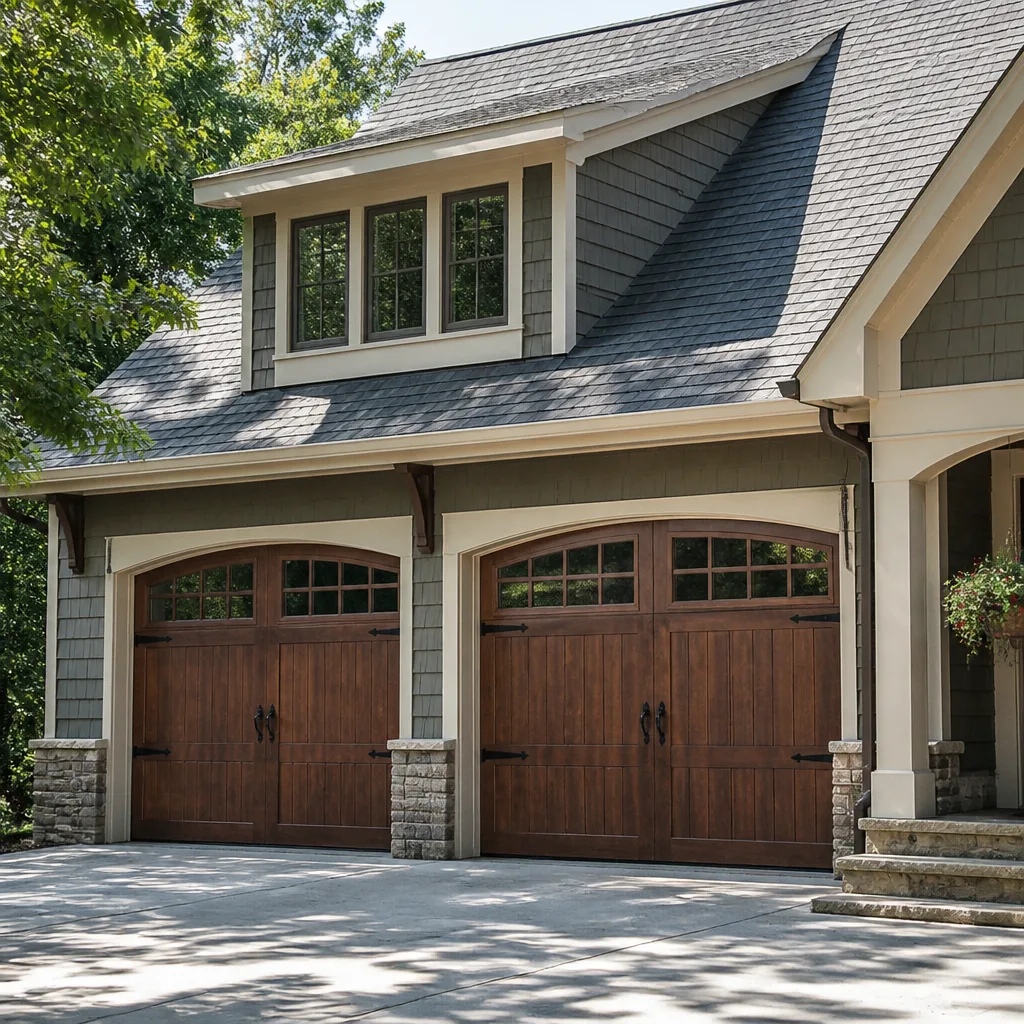 Carriage house
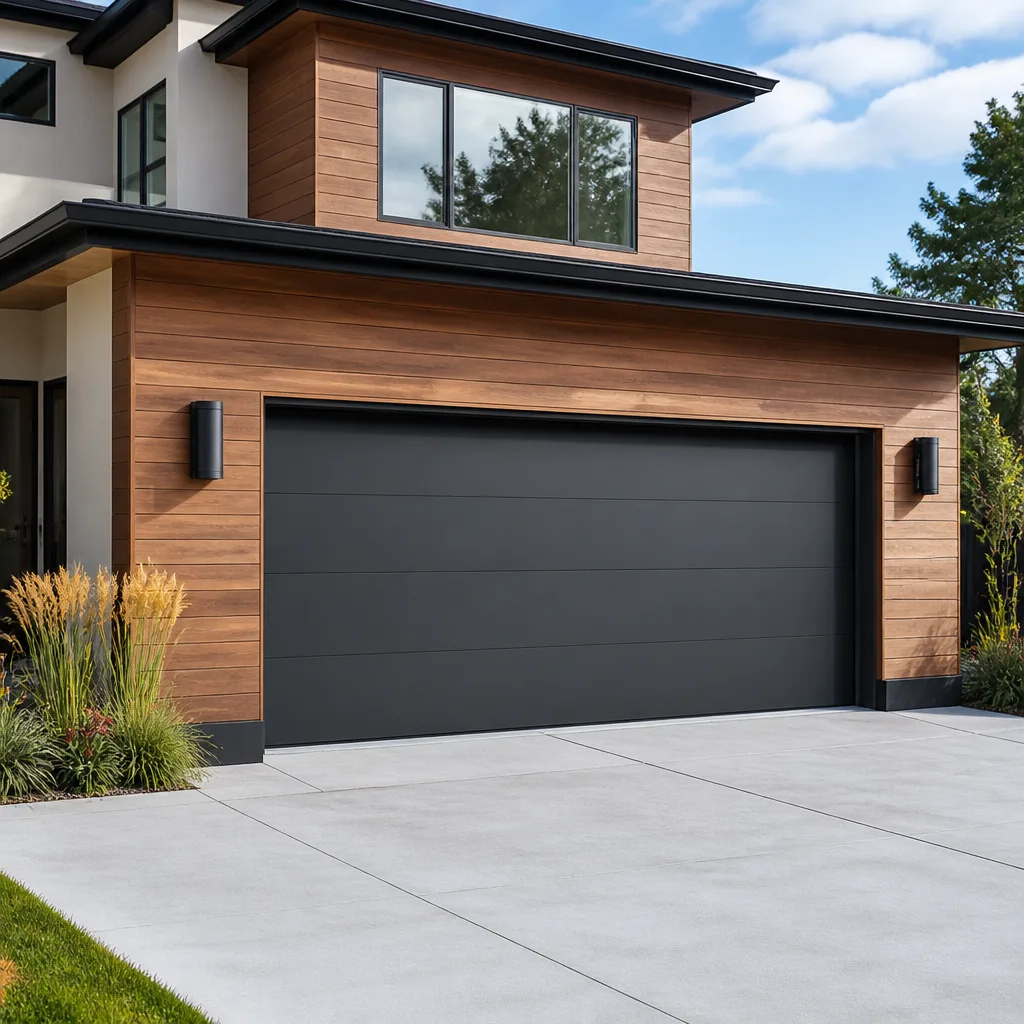 Modern flush
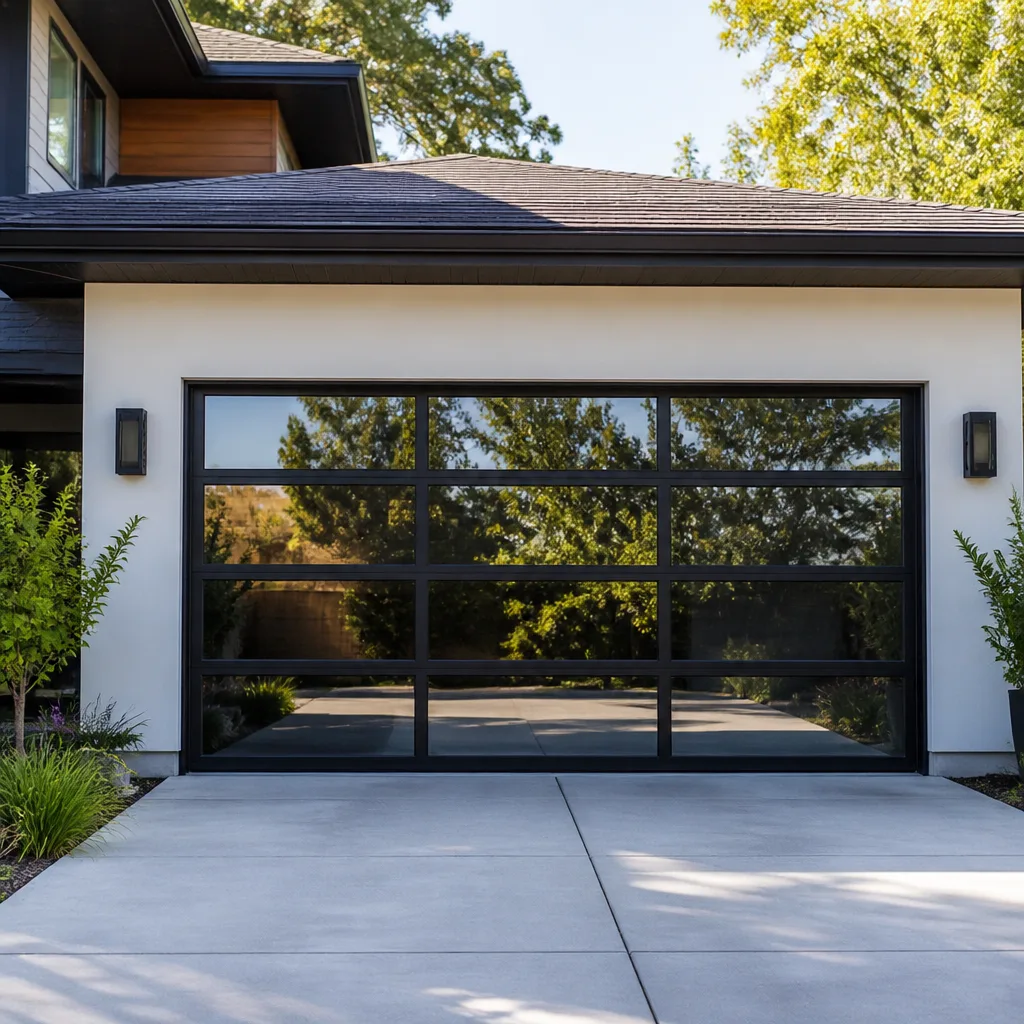 Full-view glass
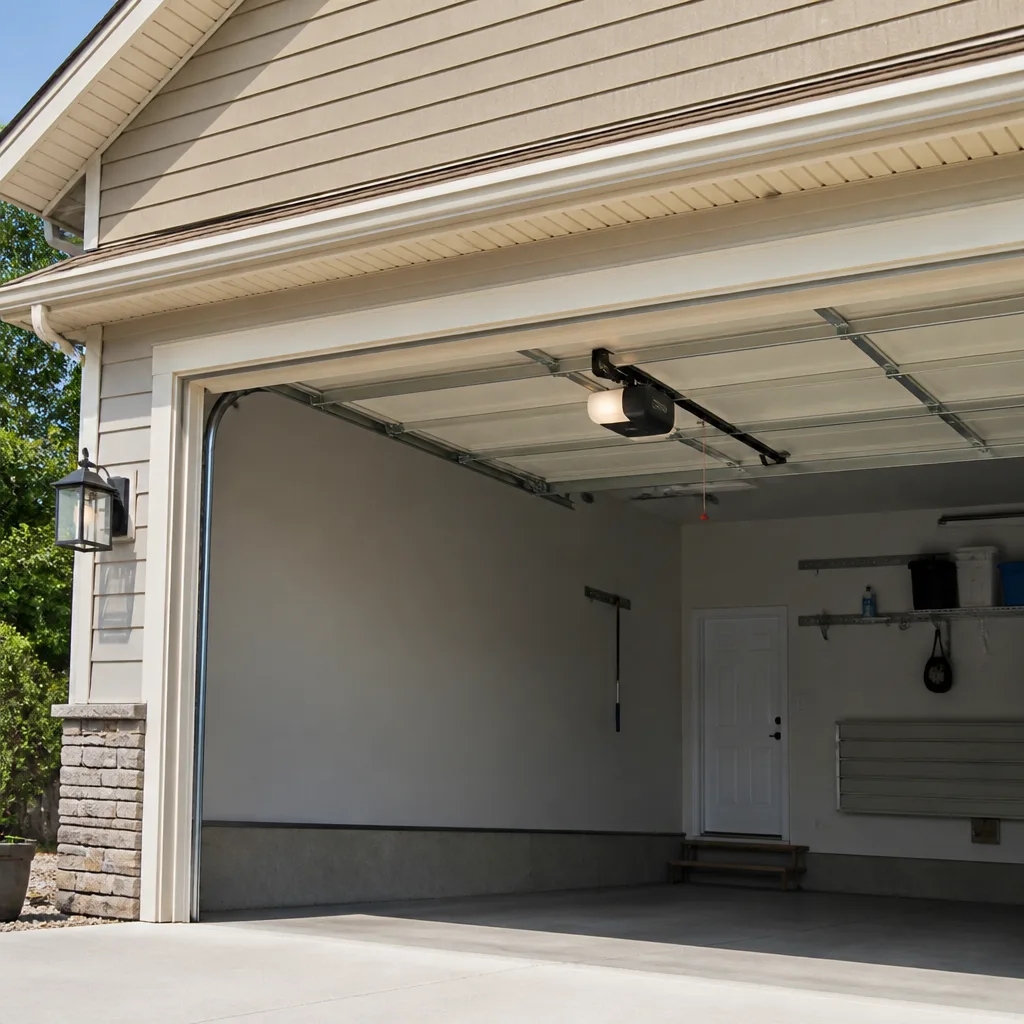 LiftMaster openers
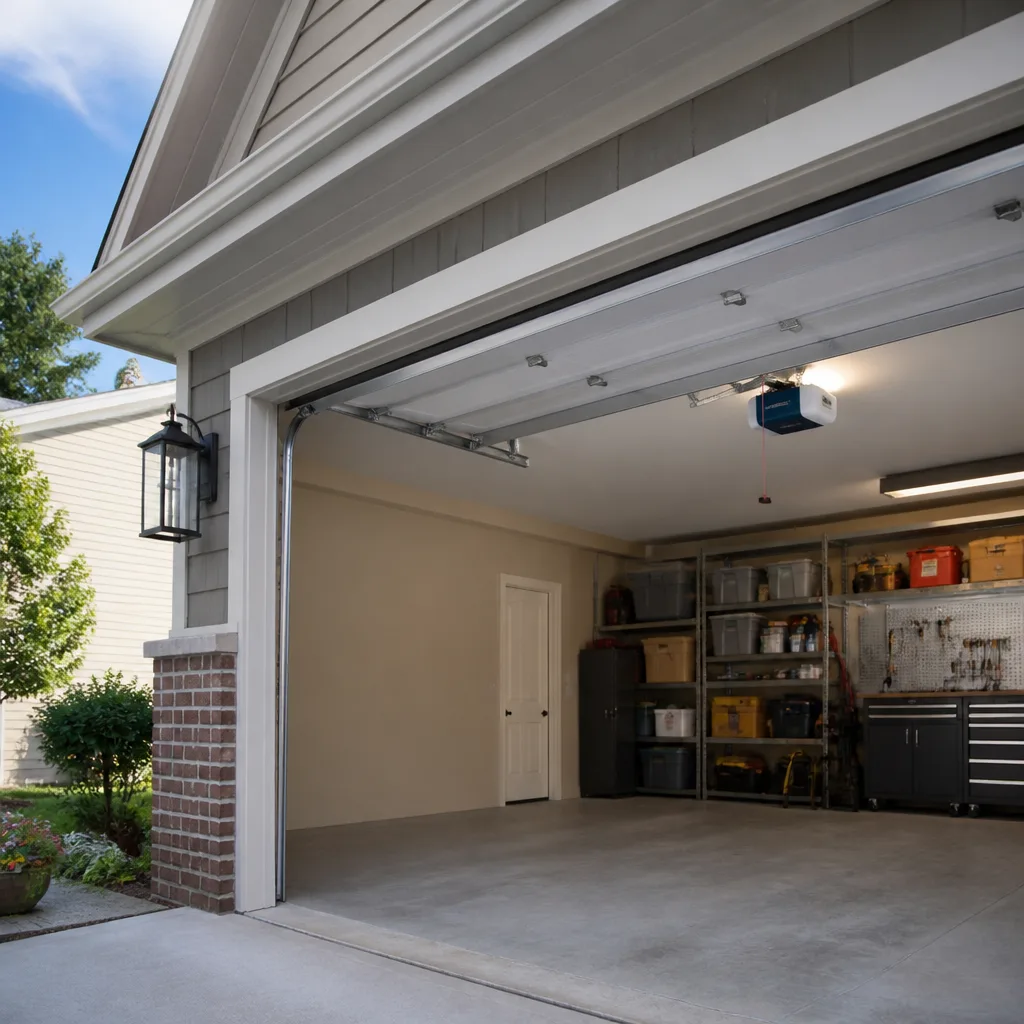 Chamberlain openers
Full 25-point door and opener safety check with every visit - springs, cables, rollers, tracks, and your LiftMaster or Chamberlain opener included
You get a price before we start. It does not change when the pro arrives.
Get your free estimateGarage Door Warning Signs: An Auburn Homeowner’s Reference Guide
A grinding noise on the way up and silence on the way down aren’t the same problem. They’re two completely different components failing, and treating them the same way is how a small repair turns into an expensive one. We’ve seen it happen plenty of times across Auburn: a homeowner hears something odd, assumes it’s just age, and waits. Then a spring snaps or an opener burns out, and the job doubles in scope. This guide maps each sound, movement, and smell to the exact component behind it, ranks how urgent each one is, and shows you how to tell a spring problem from an opener problem from a track issue before you pick up the phone.
Quick Answer
The most common garage door warning signs in Auburn are grinding or squealing noises (worn rollers or dry hinges), a door that reverses unexpectedly (safety sensor misalignment), a door that lifts a few inches and stops (broken spring or failing opener motor), and visible rust streaks or mold on the weatherstrip (moisture intrusion from the damp Puget Sound climate). Any of these warrants a professional look; a door stuck halfway or a snapped spring needs same-day attention.
Styles & brands we work with
- Raised-panel steel
- Carriage house
- Modern flush
- Full-view glass
- LiftMaster openers
- Chamberlain openers
Table of Contents
- The Symptom-to-Component Map: What Each Sound Tells You
- Visual Warning Signs That Predict Failure Within 30 Days
- Spring Tension vs. Opener Motor vs. Track Friction: How to Tell the Difference
- Why a Reversing Door Is a Safety Sensor Issue Until Proven Otherwise
- Warning Signs Unique to Auburn’s Climate
- Urgency Levels: When to Watch, When to Call, When to Call Now
- What Repairs Typically Cost in the Auburn Area
- Preventive Checks You Can Do in Ten Minutes
The Symptom-to-Component Map: What Each Sound Tells You
Every distinct sound a garage door makes comes from a specific part. Once you know the map, you can describe the problem accurately when you call, which saves diagnostic time and usually keeps the repair smaller. Here’s how we break it down after years of working on door systems throughout Auburn.
- Grinding on the way up or down: Usually worn steel rollers that have lost their bearings, or a track that’s bent so the roller is scraping the rail. Roller replacement is typically the lower-cost fix; a misaligned track needs a technician to straighten it rather than force the door past it.
- High-pitched squealing: Dry hinges and rollers. Metal-on-metal with no lubrication left. This is often the cheapest fix on the list, but left alone it wears the hinge pins flat and the squeal becomes a wobble.
- Loud banging or a booming on startup: Loose opener chain or belt, or worn torsion springs that have lost tension and are letting the door drop on the operator. Banging is a call-today symptom because it stresses the opener motor every cycle.
- Clicking that repeats: Usually a failing opener gear or a logic board issue, depending on the brand. LiftMaster and Genie systems each have their own characteristic relay and gear sounds, and knowing which brand you own helps us diagnose faster.
- Rattling when the door is down: Loose bolts on the door panels or hinge plates backing out. Simple, but on a door that runs daily in a busy Auburn household, loose hardware works itself into bigger problems quickly.
If you can tell us which sound, on which cycle, and for how long, you’ve already narrowed the repair. For repairs we handle as a core part of our service, see garage door repair.
Visual Warning Signs That Predict Failure Within 30 Days
Some of the clearest warnings are things you can see without hearing anything. Springs, cables, and rollers all give visual signals before they fail. When we inspect a door that’s been making noise for weeks, these are the items we check first, because they’re the ones that tend to fail inside a month if nothing is done.
- Gaps or separation in the torsion spring coil. A healthy spring is a tight, continuous coil. A visible gap means the steel is fatiguing and the spring is close to snapping. This is a stop-using-the-door sign.
- Rust-colored streaks on the spring itself (not the door). Fresh rust on a torsion spring often points to a broken wire inside the coil. It’s easy to mistake for cosmetic rust, but it’s the structural sign that matters most.
- Frayed or kinked lift cables. Cables run along the sides of the door. Fraying at the drum or near the bottom bracket means the cable is on its last few cycles, and a snapped cable can whip with force.
- Flat-spotted or cracked rollers. Rollers that no longer roll smoothly are grinding the track and the door. Replacing them early is a small job; replacing a damaged track is not.
- Sagging door panels. A door that no longer sits flush across the top is usually a sign that the springs are unbalanced or the hinges have separated from the panel.
- Bent or bowed track sections. Even a slight bow adds friction on every cycle. Even a slight bow adds friction on every cycle. Untreated, it forces the opener to work harder, and the opener motor pays the price.
Any of these visual signs, with or without sound, means the door is due for a professional inspection. For opener-specific concerns, garage door opener repair covers the full range of brands we work on, including Chamberlain, Genie, Craftsman, and LiftMaster.
Spring Tension vs. Opener Motor vs. Track Friction: How to Tell the Difference
A slow or struggling door isn’t always the opener. More often than not, the opener is doing its job and fighting a mechanical problem elsewhere. Before you call, a few observations help pinpoint the issue, and they can reduce the amount of diagnostic time on the first visit.
Signs it’s a spring tension issue
- The door lifts a few inches and stops, then the opener motor hums with no movement.
- The door is very heavy to lift by hand (once you’ve disconnected the opener, which we recommend only for a quick weight test, never for a repair).
- The door slams down faster than it should on close.
- The top of the door is uneven with the header on one side.
Signs it’s an opener motor issue
- The door moves normally on manual release but the motor won’t engage.
- The opener runs but the door barely moves; you might hear the motor spinning without the chain or belt pulling.
- The opener’s lights flash in a pattern, or the wall control is unresponsive.
- Only one remote works, or the app control has stopped responding on a Wi-Fi-enabled system.
Signs it’s a track friction issue
- The door moves but pulls to one side.
- You can see the roller scraping the side of the track.
- The door makes a stuttering, jerky motion instead of a smooth glide.
- You’ve already lubricated the hinges and rollers and the jerking continues.
If you’re not sure which category you’re in, describe the symptoms and we can tell you the likely cause before we visit. Spring work is the most mechanically dangerous job on a garage door in Auburn, and we treat it that way: springs are high-tension steel, and handling them without the right tools and training is not a safe DIY job.
Why a Reversing Door Is a Safety Sensor Issue Until Proven Otherwise
A door that reverses unexpectedly on close is a safety sensor problem in the overwhelming majority of cases. The sensors are the two small lenses mounted on the track near the floor, one on each side. When they’re misaligned, dirty, or the beam is blocked by something (a spider web, a stray leaf, a bicycle pushed too close), the door gets a “something’s there” signal and reverses. This is the system working as designed, not a mechanical failure.
Here’s how to test it in about 60 seconds:
- With the door fully open, look at each sensor. A solid indicator light on both means they’re powered and aligned. A flickering or off light points to the problem.
- Wipe the lens on both sensors with a dry cloth, then check the lights again.
- Clear anything within a couple of feet of the sensors on the floor.
- Close the door and watch. If it still reverses at the same spot, the issue is in the wiring or the sensor alignment, not debris.
If the test clears the problem, good. If it doesn’t, don’t disable the sensors to make the door close. That’s the one thing we’d never recommend; those sensors exist to stop the door on a child or a pet. If it turns out the sensors are working and the door still reverses, the problem is usually in the opener’s travel limits or the force adjustment, and that’s a job for a technician who knows your brand’s control panel. That work belongs with a specialist, which is why we handle garage door opener repair as a dedicated service across Chamberlain, Genie, LiftMaster, and Craftsman systems.
Warning Signs Unique to Auburn’s Climate
Auburn sits in the damp band of the Puget Sound region, and the wet, cool stretch of the year does specific things to a garage door that drier climates don’t. In our experience, the following three warnings show up more often in Auburn homes than in the national guides.
Rust streaks on the door face and hardware
The constant moisture between October and spring works on the door’s bottom section first, then the hinges and the track. Rust streaks on the door face usually start near the bottom edge where water sits, and rust on the hinge plates is a sign that the pivot points are losing smooth motion. On Clopay and Amarr steel doors, the bottom panel is the one to check every fall.
Moisture in the opener housing
A damp garage in Auburn puts humidity into the opener motor housing. If you see condensation inside the housing or on the circuit board area, or the opener’s logic board has started behaving intermittently, moisture may be the reason. LiftMaster and Genie units with onboard logic boards are especially sensitive to this, and it shows up as random lights or a wall control that responds sporadically.
Weatherstrip mold and seal failure
The rubber or vinyl weatherstrip along the bottom and sides is what keeps water out. When it starts to crack, pull away, or grow a dark line of mold on its inner face, the seal has failed. That means water is getting behind the door and onto the floor, and the seal needs replacing before the wood trim around the door shows water damage. Green or black streaks on the weatherstrip are a maintenance sign, not a reason for alarm; just replace the strip.
Urgency Levels: When to Watch, When to Call, When to Call Now
Not every warning sign is an emergency, and treating them all the same way leads to either overspending or waiting too long. Here’s how we sort urgency for Auburn homeowners.
- Watch (call within a week or two): Squealing hinges, rattling hardware, a single roller starting to flatten, weatherstrip mold. These are low-cost fixes that become more expensive if ignored, but they aren’t immediate safety risks.
- Call (within a day or two): Grinding on every cycle, a door that won’t stay level, an opener that randomly reverses, or a visible gap in the spring coil. The door is still usable but every cycle is adding wear.
- Call now (same day): A snapped torsion spring, a snapped cable, a door stuck halfway open, a door that slams down, or a garage that won’t secure. These are the situations our dedicated emergency service exists for.
If your car is trapped, your home is unsecured, or the door won’t move and it’s holding up your day, that’s what emergency service is for. If it’s a slow, worsening noise, you can take a breath and schedule it. For spring-related symptoms, our garage door spring repair page explains how the job works and why the safety angle matters.
What Repairs Typically Cost in the Auburn Area
Repair costs in the Auburn market depend on the part, the brand, and whether the door is a standard single-car or a larger double-car unit. Below are typical estimated ranges for common repairs; they’re a planning guide, not a quote, and the written estimate you get before work starts is the number that counts.
| Repair | Typical estimated range | Notes |
|---|---|---|
| Torsion spring replacement, one spring | $180 – $340 | Matched pairs are usually replaced together, so a pair typically runs about double this range. |
| Cable replacement | $160 – $280 | Often done alongside spring work. |
| Roller replacement (set) | $130 – $240 | Worn rollers are the most common cause of grinding. |
| Hinge and hardware tightening or replacement | $100 – $200 | Common fix for rattling and squealing. |
| Safety sensor realignment or replacement | $110 – $220 | Includes sensor test and opener travel check. |
| Opener repair (motor, logic board, gear) | $150 – $400 | Varies by brand; LiftMaster and Genie parts may differ in cost from Chamberlain or Craftsman. |
| Weatherstrip replacement | $100 – $220 | Most useful to schedule before the wet season. |
Two things to know about pricing on any garage door work in Auburn. First, the quote is discussed and agreed before any work starts, so there’s no surprise at the end. Second, if the technician finds a problem the original estimate didn’t account for – say, a bent track under the door – they’ll explain it and re-quote before proceeding, not after.
We work on the full set of major residential brands, including LiftMaster, Chamberlain, Genie, Clopay, Amarr, Wayne Dalton, Craftsman, and Raynor, so the parts and the torque specs match your door. For larger jobs, such as a full replacement or new opener, our Auburn Garage Door Repair Pros team can walk you through the options.
Preventive Checks You Can Do in Ten Minutes
Ten minutes twice a year covers most of what a garage door needs from a homeowner. These aren’t repairs, just checks; anything that fails the check is a call to a professional.
- Lift the door by hand with the opener disengaged and check whether it’s smooth and manageable; a door that’s very heavy is a spring warning.
- Look at the spring coil for gaps or fresh rust.
- Run your eye along each lift cable for fraying.
- Wipe the safety sensor lenses and check the indicator lights.
- Check the weatherstrip for mold, cracks, or separation from the door.
- Listen for new sounds on one full cycle up and one down.
- Look at the door face and hardware for any new rust spots, especially on the bottom section.
If any of those checks turn up something, jot down what you saw or heard and call us. You don’t need to diagnose the exact part. A precise description plus a brand name saves time on the first visit.
Common Mistakes to Avoid
- Ignoring a new sound because the door still moves. If the door is closing and opening, it feels like there’s no urgency, but the noise is often a part on its last few cycles. In Auburn, where the damp months stretch into spring, rust and wear move faster than homeowners expect.
- Forcing a stuck door with the opener’s force adjustment. Crank the force up and the door may move, but the spring or the track is still broken. You’ve just told the motor to work through a problem that needs a repair.
- Trying to adjust or replace springs yourself. Torsion springs are under high tension and a spring failure can cause serious injury. This is the one area where a professional is essential, not optional.
- Disabling the safety sensors to make the door close. It solves the annoyance and removes the safety feature that protects anyone under the door. Fix the sensor, don’t bypass it.
- Replacing an opener when the spring is the real problem. A struggling door often has a mechanical issue that a new opener will only mask. Diagnose the door first.
- Waiting until the wet season to replace the weatherstrip. If you’ve seen mold or separation in the fall, replace it then. Waiting means more moisture getting behind the door through the winter.
- Assuming all brands are the same. Opener logic and spring torque specs vary by manufacturer. A Genie gear is not a Chamberlain gear. Brand-specific knowledge matters when the part needs replacing.
See the difference
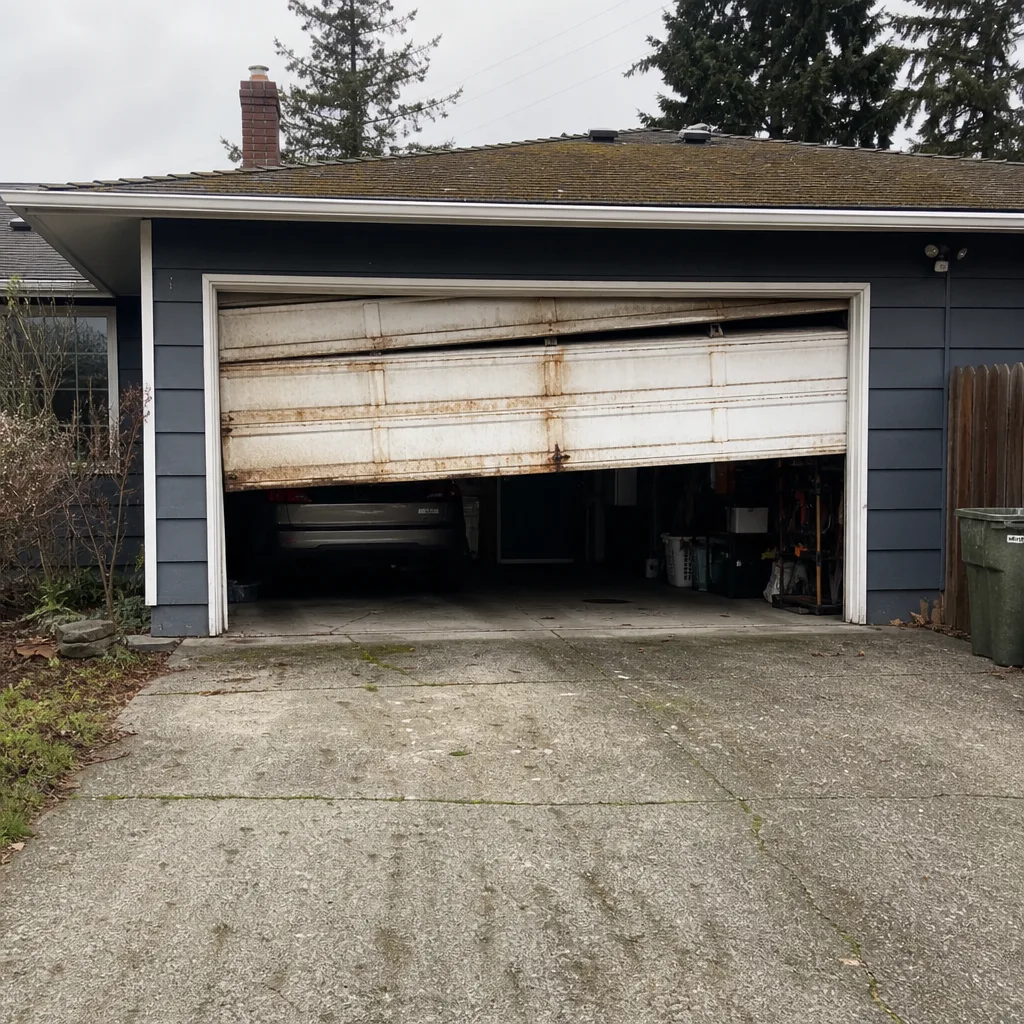 Before
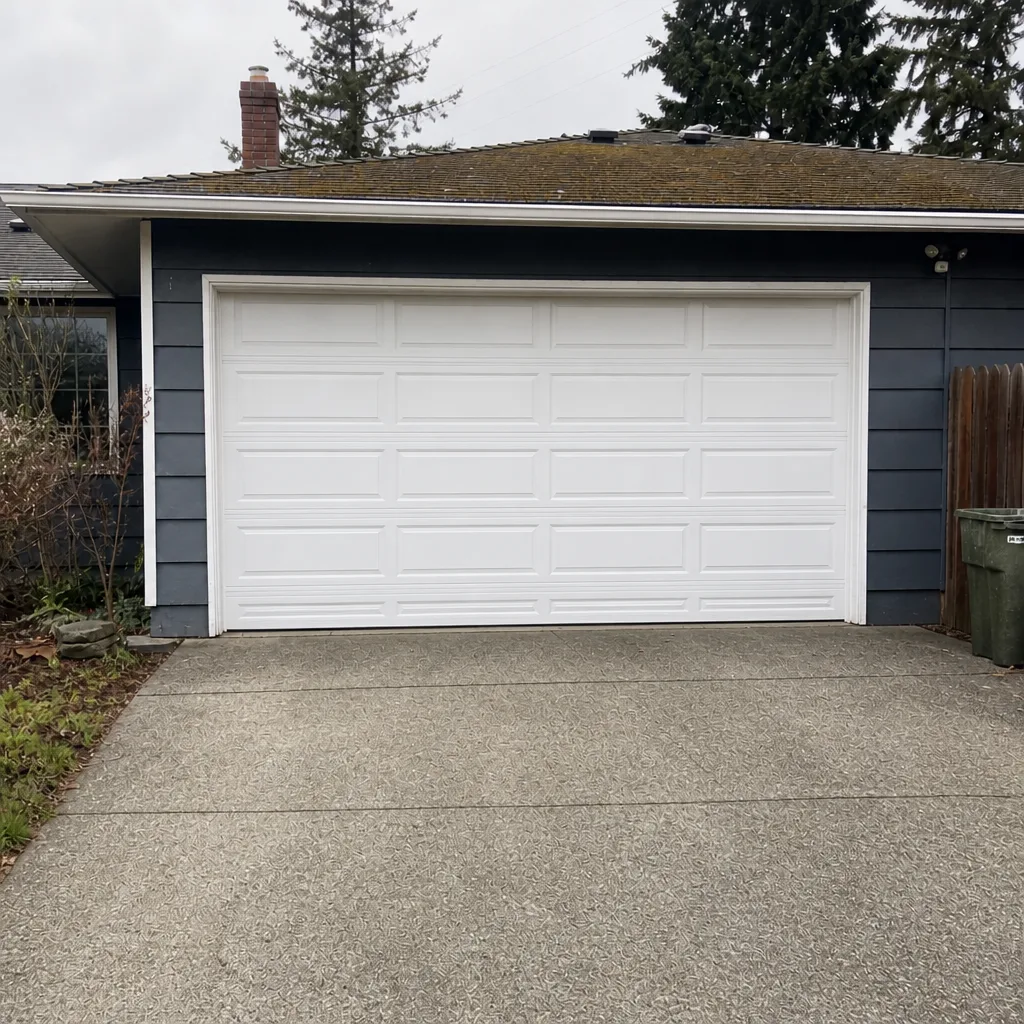 After
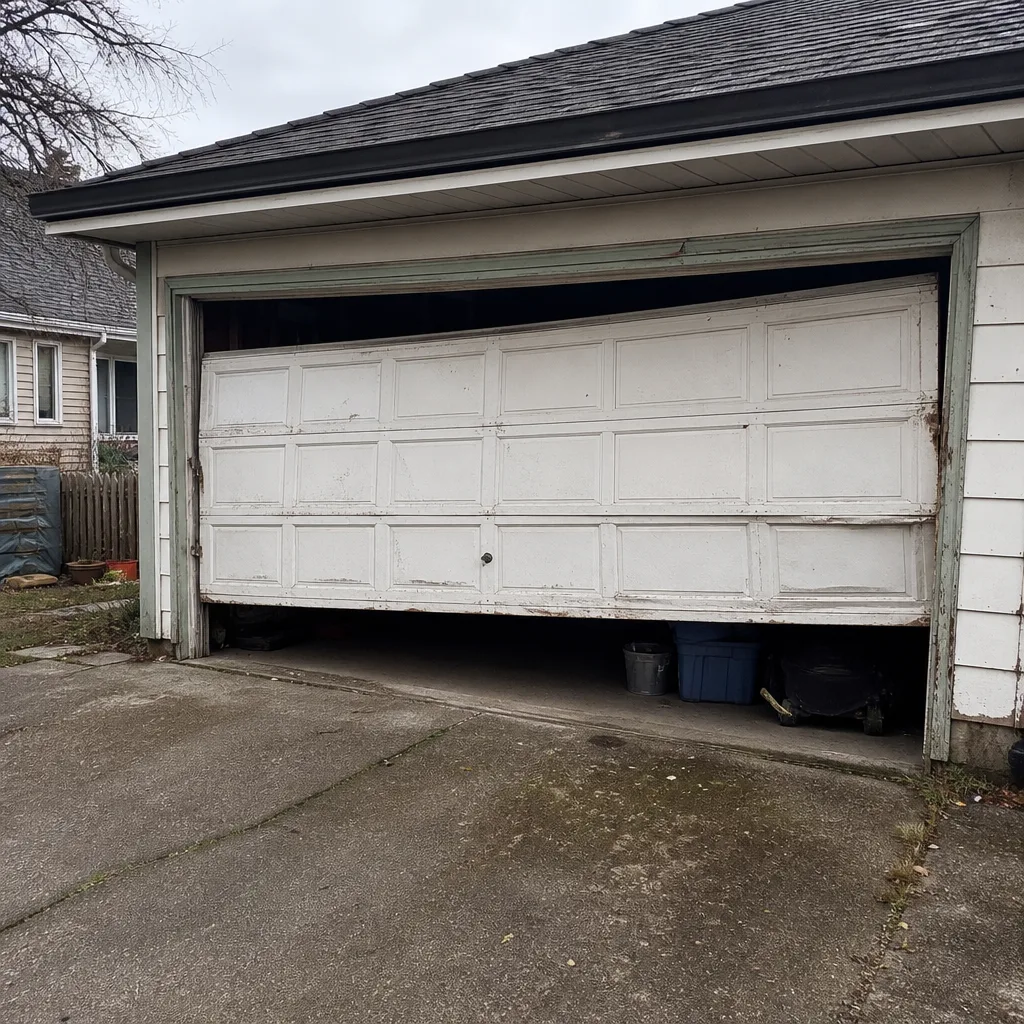 Before
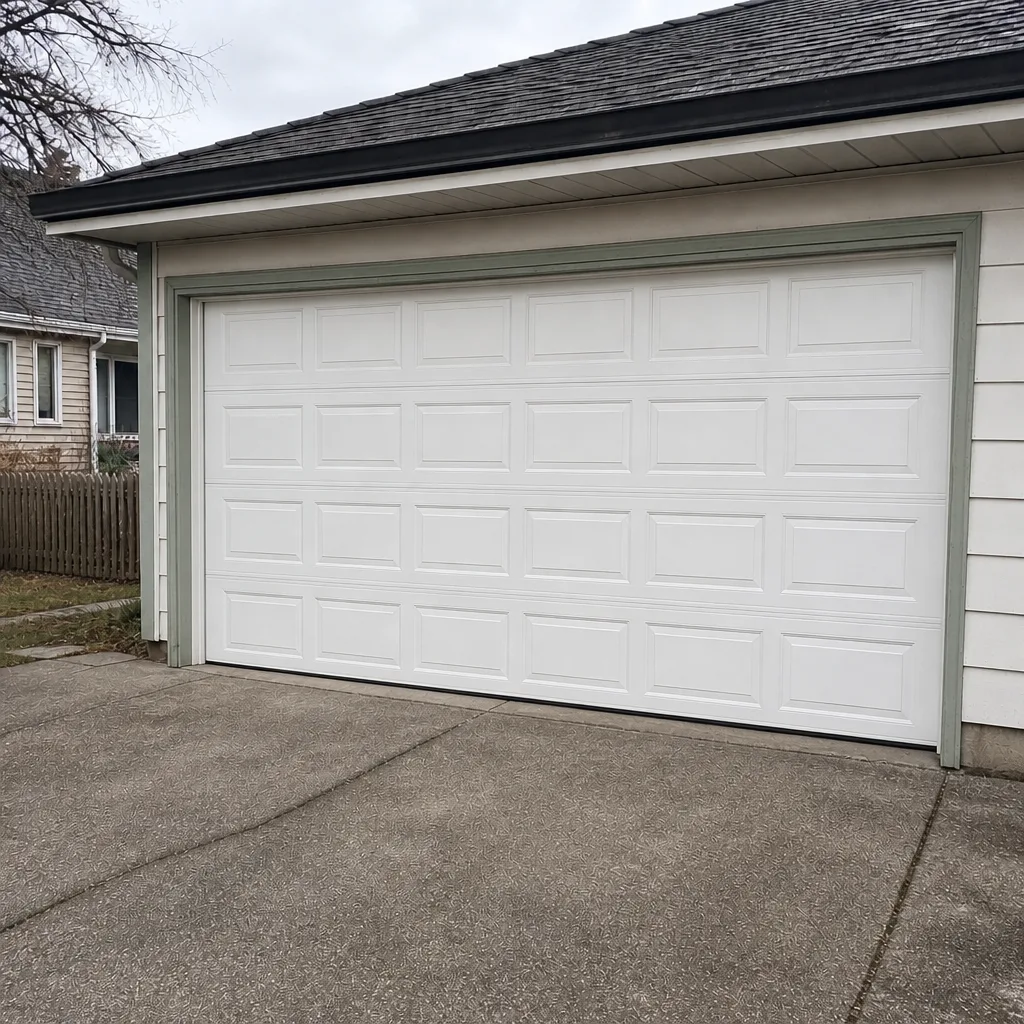 After
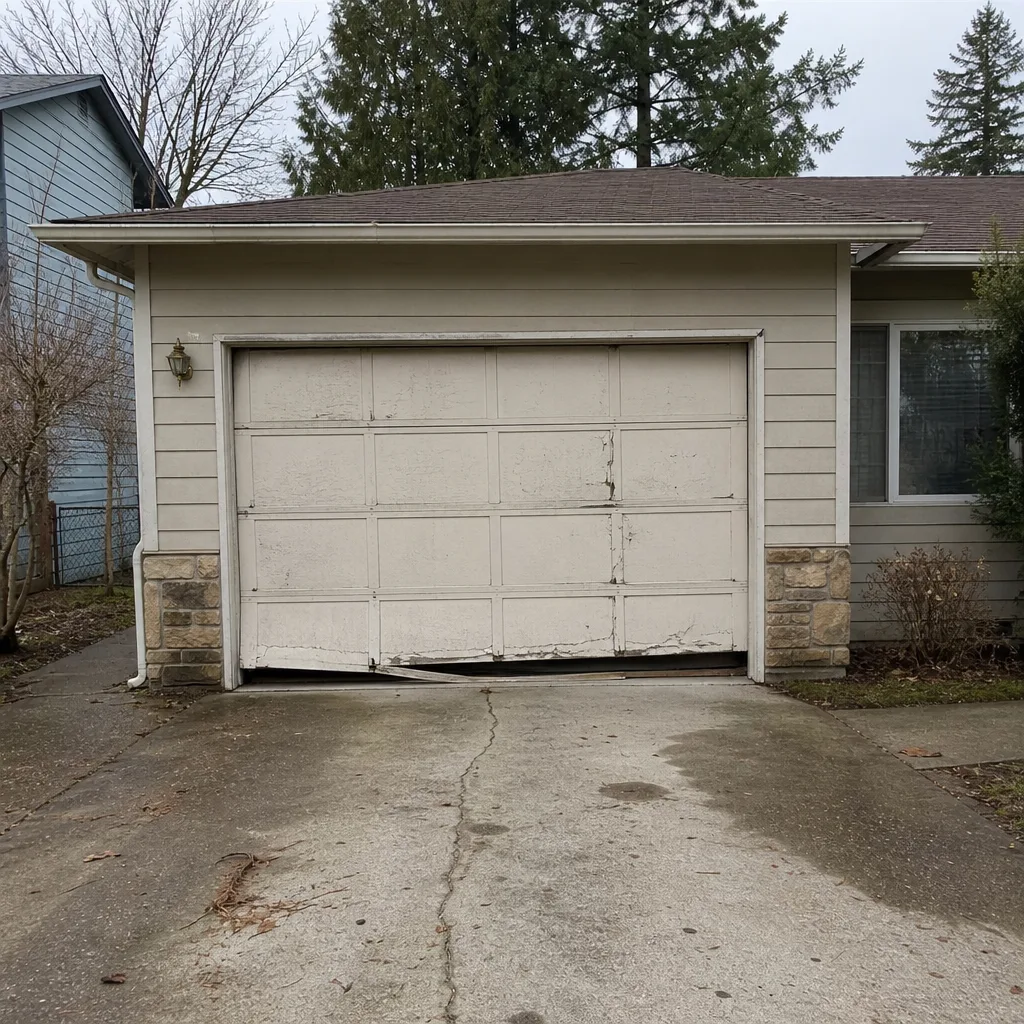 Before
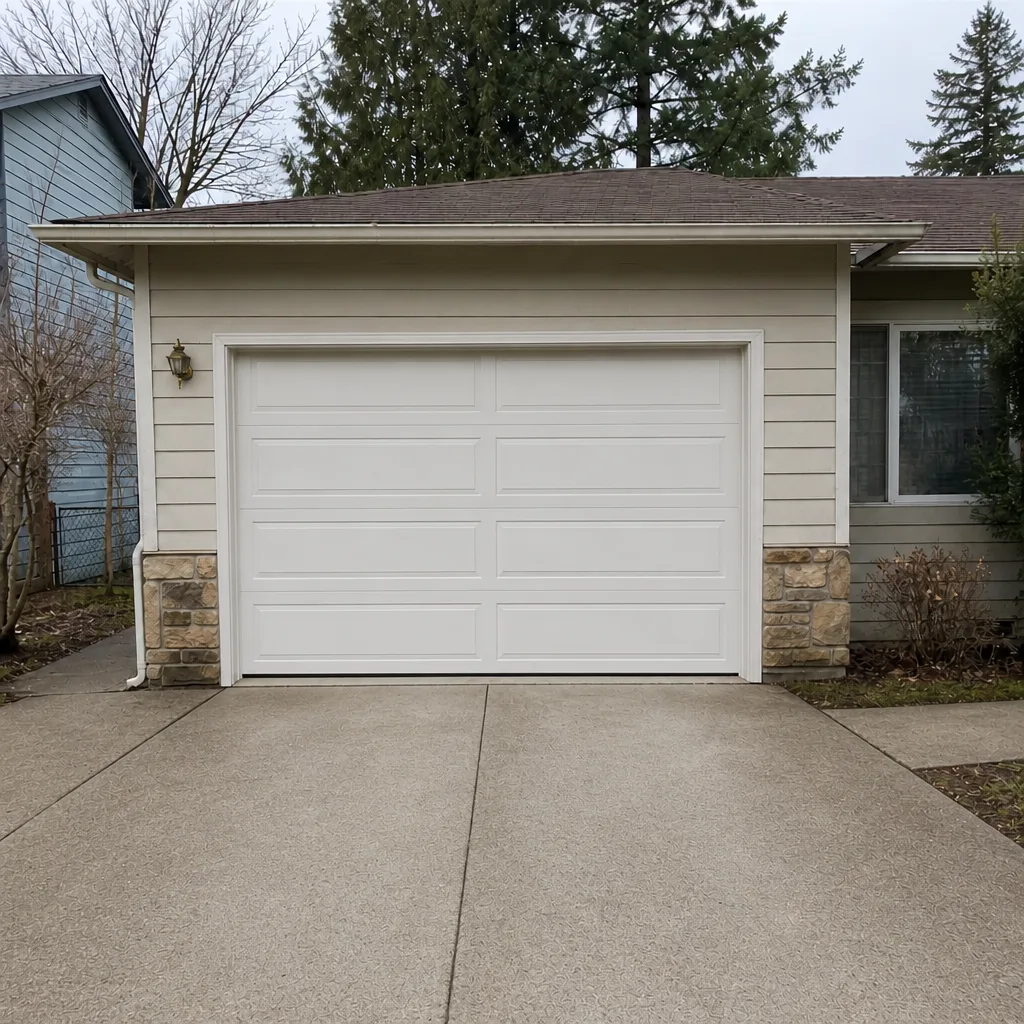 After
When to Call a Professional
Call us if you hear grinding on every cycle, if the door reverses without a cause you can see, if the spring has snapped or shows a gap in the coil, or if the door won’t fully open or close and your car is trapped. Same for a door that’s visibly sagged or a cable that’s frayed. And if the problem is the opener rather than the door, there’s no need to guess: we handle opener failures across Chamberlain, Genie, LiftMaster, and Craftsman systems. Our technicians have up to 10 years of experience. Auburn Garage Door Repair Pros offers free estimates in Auburn – call (877) 792-5887. We’re open Sunday through Friday, 7am to 7pm, and closed Saturday.
Frequently Asked Questions
The first sign is usually a gap or separation in the torsion spring coil, or a door that lifts a few inches and stops. A door that feels very heavy on manual release is another clear sign. If you spot any of these, stop using the door and call a professional; spring replacement should never be a DIY job. Call (877) 792-5887 for a free estimate.
Typical estimated repair ranges in Auburn run from about $100 – $200 for minor hardware work to $180 – $340 for a single torsion spring, with cable and roller jobs landing in between. The number depends on the part, the brand, and whether the door is single or double. The written estimate is the final price, and it’s agreed before any work starts. Call (877) 792-5887 for an exact quote – estimates are free.
Yes, emergency garage door service is one of our core offerings for failures that can’t wait, including a door stuck halfway or a snapped spring. We’re open Sunday through Friday, 7am to 7pm, and closed Saturday. Call (877) 792-5887 and we’ll get you scheduled.
The local professionals we connect you with are licensed and insured as their state requires. We work on eight of the most widely installed residential brands, including LiftMaster, Chamberlain, Genie, Clopay, Amarr, Wayne Dalton, Craftsman, and Raynor. Call (877) 792-5887 for details on your job.
The price is quoted and agreed before any work begins, and that number is the price. If the technician finds a related problem the estimate didn’t cover, they’ll explain it and re-quote before proceeding, not after. You’ll never be surprised by a larger invoice at the end. Call (877) 792-5887 for a free estimate.
Test the safety sensors first: wipe both lenses, check for solid indicator lights, and clear anything near them. If the door still reverses, it’s usually an opener travel limit or force adjustment issue that needs a technician. Don’t disable the sensors. Call (877) 792-5887 and describe what you saw.
The Bottom Line
Warning signs are a garage door’s way of telling you which part is wearing out. A grinding noise is a roller. A banging startup is a spring or a chain. A reversing door is a sensor. Rust streaks and moldy weatherstrip are Auburn’s moisture at work. Read the symptom, match it to the component, judge the urgency, and you’ll make a better call than a homeowner who waits for something to break. If the sound or the sight makes you uneasy, don’t talk yourself out of it. We handle repairs, springs, openers, and full installs, and we’re open Sunday through Friday, 7am to 7pm, closed Saturday. Call (877) 792-5887 for a free estimate, and we’ll give you a clear diagnosis and an honest price before any work starts.
Written by the team at Auburn Garage Door Repair Pros.