Last updated November 21, 2026
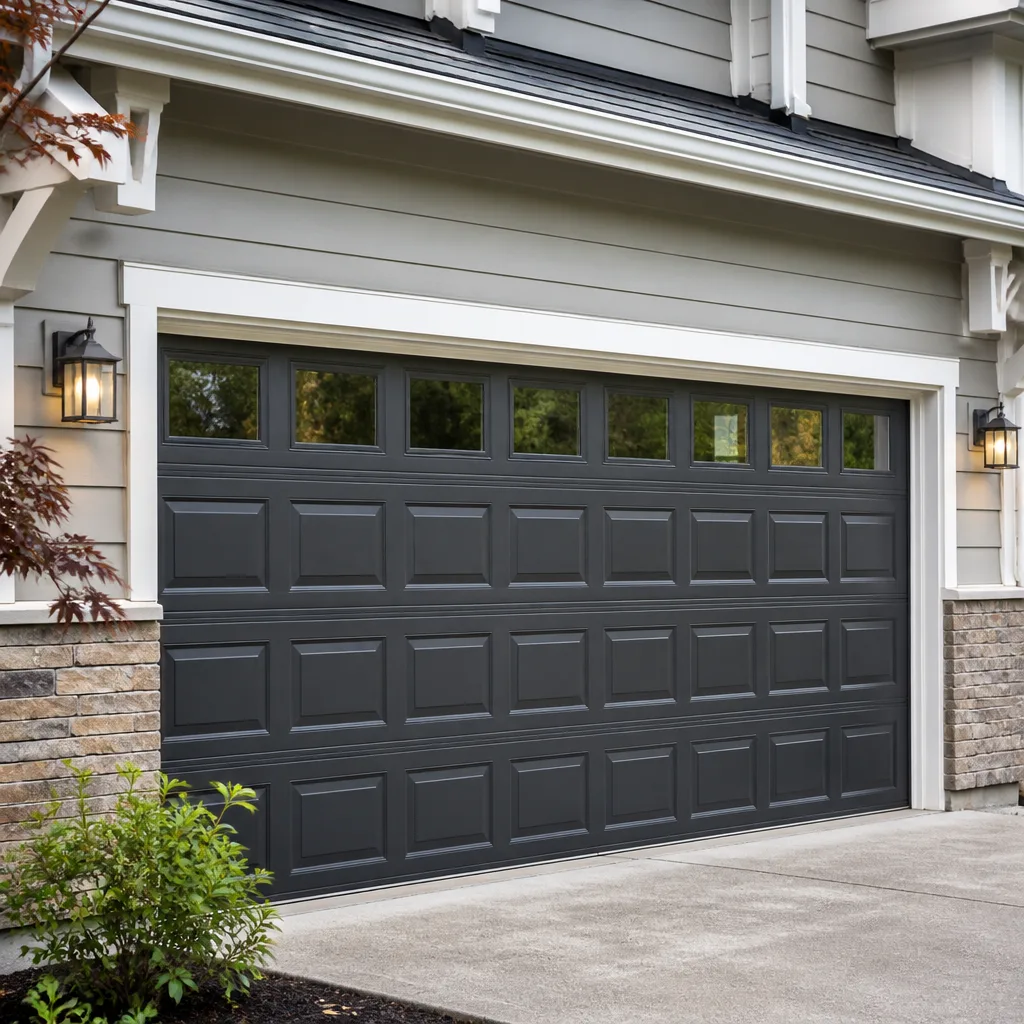 Raised-panel steel
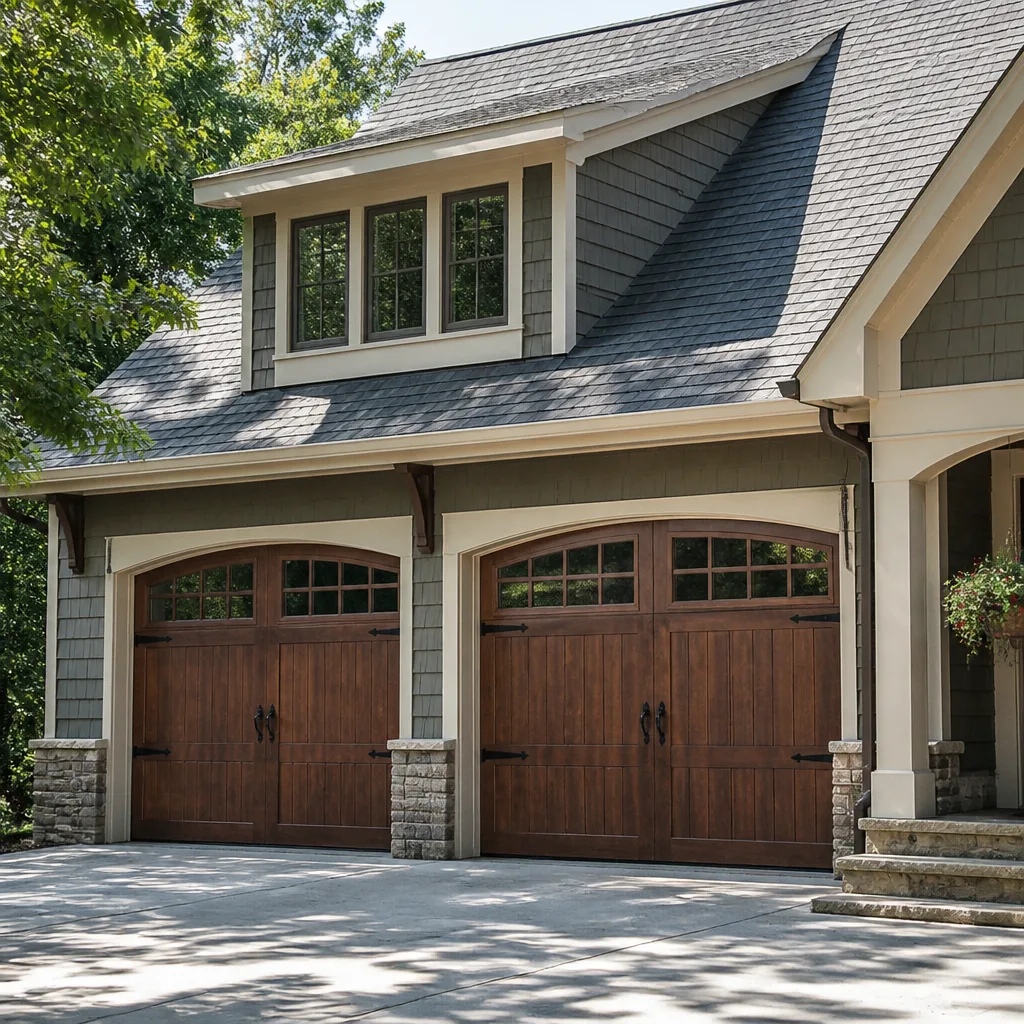 Carriage house
 Modern flush
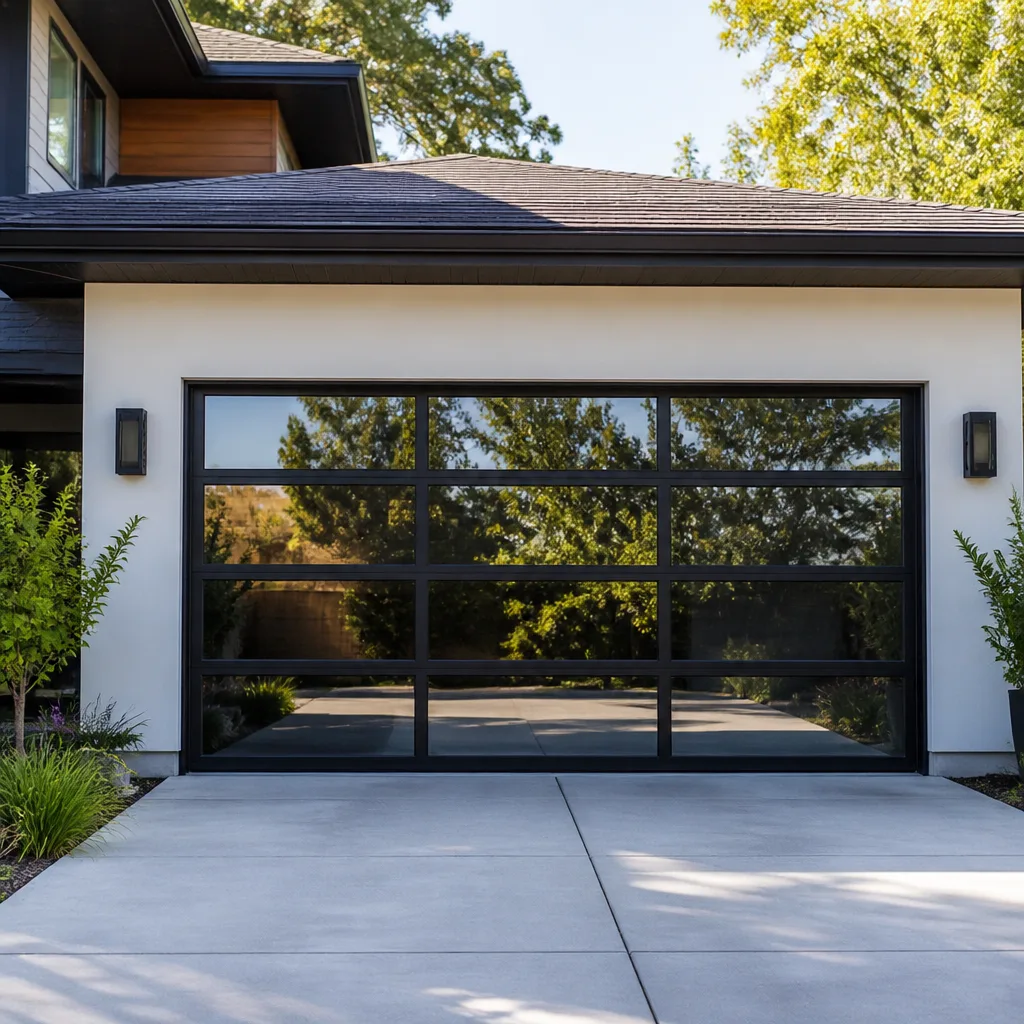 Full-view glass
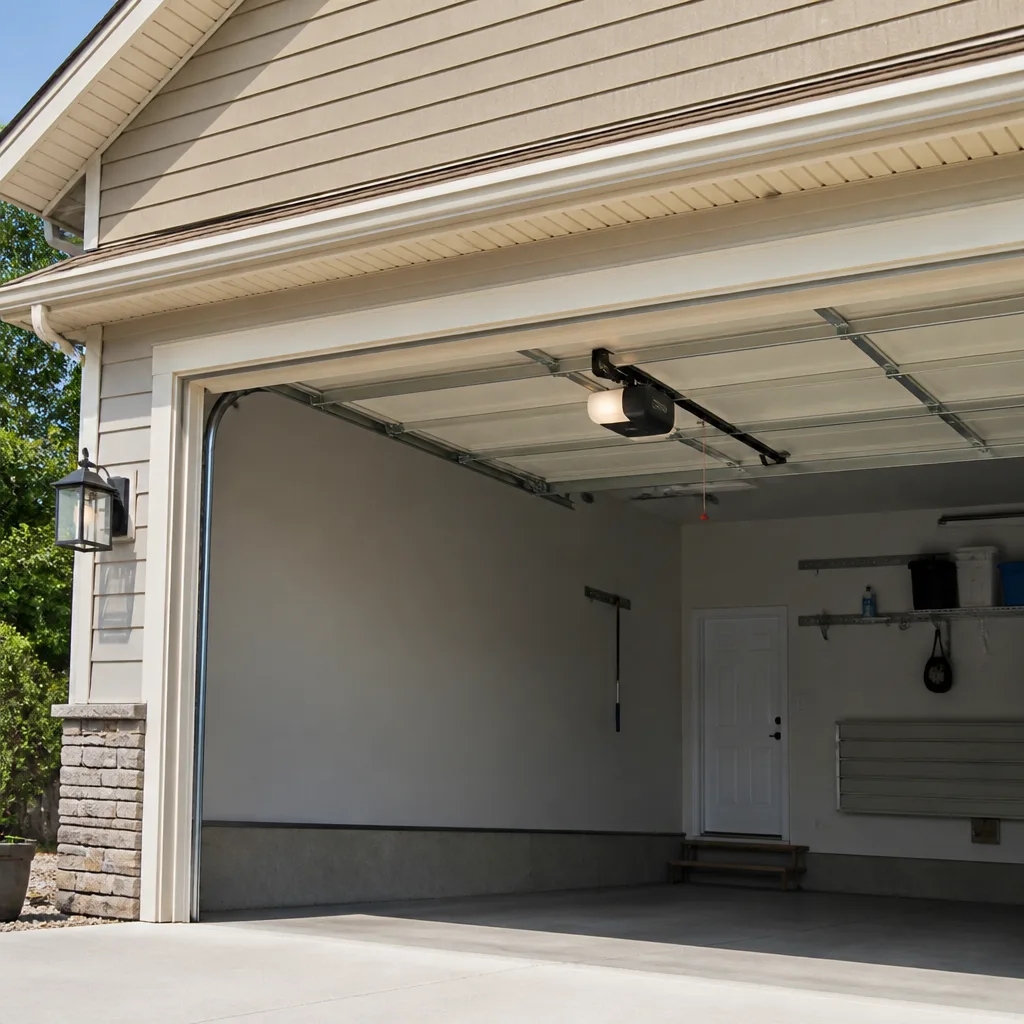 LiftMaster openers
 Chamberlain openers
Full 25-point door and opener safety check with every visit - springs, cables, rollers, tracks, and your LiftMaster or Chamberlain opener included
You get a price before we start. It does not change when the pro arrives.
Get your free estimateDIY vs Professional Garage Door: The Auburn Homeowner’s Decision Guide
Torsion springs store enough energy to cause a serious injury in a fraction of a second. That’s not a scare tactic, it’s the reason professional spring replacement costs what it does, and why the math on DIY spring work never actually favors the homeowner. The garage door is one of the few systems in your home where the line between “safe to tackle yourself” and “genuinely dangerous” is sharp, predictable, and easy to identify once you know where it falls. This guide draws that line for you, task by task, with the part costs and trade-offs you’ll actually face in Auburn. You’ll learn which jobs are a reasonable Saturday project and which ones require a specialist who works on the mechanism for a living.
Quick Answer
Lubrication, photo-eye sensor alignment, and remote or keypad programming are safe to do yourself. Spring replacement, cable repair, and track realignment are not – the stored mechanical energy and tension in those components make amateur work dangerous regardless of your skill level. Everything else falls in between and depends on whether you can source the correct part for your specific door and have a second person to hold the system stable while you work.
Styles & brands we work with
- Raised-panel steel
- Carriage house
- Modern flush
- Full-view glass
- LiftMaster openers
- Chamberlain openers
Table of Contents
- Why Garage Door Physics Changes the DIY Calculation
- The Three Tasks That Are Genuinely Safe to DIY
- The Real Cost Comparison: Parts vs Professional Labor in Auburn
- The Jobs That Aren’t Worth Attempting: Springs, Cables, and Tracks
- Washington Licensing Rules and What They Mean for Your Warranty
- How to Set Up a Smart Opener Without Voiding Your Door’s Warranty
- The Two Questions That Make the Decision Simple
- When to Call a Professional
Why Garage Door Physics Changes the DIY Calculation
A residential garage door is a balanced system, not a simple hinged panel. The springs – torsion or extension, depending on the door – carry most of the door’s weight so a person can lift it with one hand. When the system is balanced, it’s docile. When it’s unbalanced, or when you release tension on a component that isn’t designed to be released by hand, the stored energy comes out fast and with force you cannot stop.
This matters for DIY decisions because a garage door doesn’t fail like a leaky faucet or a stuck drawer. It fails suddenly and with consequences that run beyond the door itself. A torsion spring under load can spin a winding bar out of the operator’s hands. A cable under tension can whip when it slips. A misaligned track can guide the door off its rollers at speed. Auburn’s wet winters and damp spring months mean the metal parts on a door that’s exposed to garage humidity will corrode faster than the same door in a dry climate, and corroded cables and spring fittings fail sooner and less predictably.
None of this means garage doors are fragile or that they require a professional for every adjustment. They’re well-engineered machines. The point is narrower: some adjustments work with the mechanism, and some work directly against stored energy. The rest of this guide sorts the tasks accordingly.
What “balance” actually means for a homeowner
A balanced door will stay in place when you lift it halfway and let go. If it drifts down, the springs are losing tension. If it creeps up, they’re over-tensioned. You can test balance safely with the door disconnected from the opener, but you can’t correct an imbalance safely without the right tools and knowledge of the specific spring type. That test alone tells you whether you’re dealing with a lubrication-and-alignment issue or a tension issue that belongs in a specialist’s hands.
The Three Tasks That Are Genuinely Safe to DIY
These three tasks don’t touch stored energy, don’t require specialized torque knowledge, and won’t void any warranty on your door or opener. They’re the ones worth doing yourself, and doing them well extends the life of every other component.
- Lubrication. A garage door has hinges, rollers, and a torsion shaft or extension spring assembly that all benefit from lubrication. A silicone-based spray or a lithium grease on the hinges and a light oil on the rollers keeps the mechanism running smoothly and reduces the load on the opener. Don’t grease the tracks themselves – that attracts dust and grit, which wears rollers faster. Wipe the tracks clean with a damp cloth and leave them dry. In Auburn’s damp winters, yearly lubrication is worth more than in a drier climate.
- Photo-eye sensor alignment. If your door reverses immediately after closing or won’t close at all, the safety sensors near the floor are the first thing to check. Wipe the lenses clean, make sure nothing is blocking the path, and confirm both sensors are pointing at each other. You can tell they’re aligned when the LED on each sensor glows steadily rather than blinking. This is a five-minute job that resolves a large share of “door won’t close” complaints.
- Remote and keypad programming. Adding a new remote to a Craftsman or LiftMaster opener is a matter of pressing the learn button on the motor housing and then pressing the new remote until the opener acknowledges it. The sequence is in your owner’s manual and takes a couple of minutes. The same goes for reprogramming a keypad after you move in. This is safe, fast, and doesn’t touch the door mechanism.
Those three are the ones we encourage any Auburn homeowner to handle personally. They’re the tasks where time spent calling us is time you could have spent solving the problem in your garage.
A fourth honorable mention: visual inspection
You can and should look at the door regularly. Check the cables for fraying or rust, look at the springs for visible gaps or corrosion, listen for new noises, and test the auto-reverse by placing a piece of wood in the door’s path. Catching a problem early means a cheaper repair than catching it after a failure. Visual inspection is free, and it’s the best early warning system you have.
The Real Cost Comparison: Parts vs Professional Labor in Auburn
For the tasks that are genuinely DIY-viable, the cost math rarely favors paying a professional. A can of garage door lubricant runs about $8 to $15 at any hardware store in Auburn, a set of replacement photo-eye sensors is roughly $25 to $45, and a universal remote runs $20 to $40 depending on the brand. Professional labor for the same tasks typically starts at a service-call minimum that runs higher than the parts themselves.
Here’s how the numbers break down for the common tasks:
- Lubrication: DIY parts cost roughly $8 – $15. No professional visit makes sense for this alone unless bundled with another repair.
- Sensor alignment: DIY is often $0 (just clean and realign). Replacement sensors run $25 – $45 if a unit has actually failed.
- Remote programming: DIY $0 if you have the manual and existing remote. New remote $20 – $40. New keypad $35 – $65.
- Spring replacement (one spring): A replacement torsion spring itself runs roughly $40 – $90 depending on size and cycle rating, but the time, tools, and risk make the professional labor a better value than the part cost suggests.
- Cable replacement: Parts run $15 – $40, but this is where DIY becomes a bad trade – see the next section.
- Opener replacement: A new opener runs $150 – $350 for the unit; installation is a separate line and requires electrical work at the connection point.
For a full spring job done professionally, our garage door spring repair service handles it safely and to spec, and the written estimate you receive before any work starts is the price. A matched pair of springs is usually replaced together, so a pair costs roughly twice the single-spring range. For routine repairs and tune-ups, our garage door repair service covers the smaller jobs that are cheaper to fix than to ignore.
What local suppliers actually stock
Auburn-area hardware stores and home centers carry common torsion spring sizes, generic cables, roller sets, and universal remotes. What they often don’t carry is the exact spring for your door’s weight and cycle rating, or the correct drum and cable set for a Raynor or Wayne Dalton door built to a specific model’s spec. That’s the practical reality behind the DIY decision: sourcing the right part is sometimes harder than doing the job. When the part isn’t on the shelf, ordering it online means the door sits non-functional for days – which is often the moment a homeowner calls a professional anyway, only now the door is worse off than it started.
The Jobs That Aren’t Worth Attempting: Springs, Cables, and Tracks
These three categories account for the majority of garage door injuries and the majority of jobs that get made worse by amateur work. The reason for each is different, and understanding it is what turns “be careful” into an actual decision rule.
Springs
Torsion springs are wound to a specific tension that counterbalances the door’s weight. They store enough energy to lift the door, and that’s the same energy that will release if the spring unwinds unexpectedly. There is no safe way to adjust or replace a torsion spring without proper winding bars, a solid understanding of the turns required for your specific door, and someone holding the door stable. Extension springs carry the same danger in a different geometry, and they typically require safety cables that are often missing on older doors. Even if you know physics, the margin for error is measured in fractions of an inch and fractions of a second. This is the single job in the entire garage door system where “I’m careful” is not a sufficient answer.
We do spring work as a core specialty. The right torque for a Clopay door is not the same as the right torque for a Wayne Dalton door, and getting it wrong either damages the door or leaves it unsafe. When we handle spring replacement, we do it to the specific spring spec for your door.
Cables
Lift cables run under significant tension. A frayed or failing cable can snap with enough force to cause injury and enough speed that there’s no reaction time. Replacement involves re-tensioning the system and often rebalancing the door, which brings you back to the spring problem. The right answer here is nearly always to replace cables as part of a spring job, done together so the whole system is brought back into balance in one visit.
Track realignment
This one is closer to the line – a bent track section is sometimes loose enough to straighten by hand – but the risk is that a track under load shifts when it moves, the door comes off the rollers, and the door itself becomes the problem. Tracks that have been hit by a vehicle, or that are bent from a door that jumped the rollers, need a professional assessment. A door that is off its track can drop, and if someone is underneath it, the outcome is serious.
- Springs: safe to inspect visually. Not safe to replace or tension yourself.
- Cables: safe to inspect for fraying and rust. Not safe to replace or tension yourself.
- Tracks: safe to check alignment and straightness by eye. Not safe to force back into position under load.
Washington Licensing Rules and What They Mean for Your Warranty
Washington State requires contractors to be registered, bonded, and insured to perform construction-related work for compensation, and garage door installation involves construction work in the state’s definition. That matters to a homeowner in a practical way, not just a regulatory one: a new opener installed by an unlicensed handyman can compromise the manufacturer’s warranty, and an installer without liability insurance leaves any resulting damage to the door or the home’s wiring as the homeowner’s problem.
When we connect you with a local professional through Auburn Garage Door Repair Pros, the pro is licensed and insured as the state requires. The important distinction is warranty: opener manufacturers and door manufacturers specify that installation must be done by a qualified technician to maintain full warranty coverage. A LiftMaster or Chamberlain opener installed outside that specification technically voids the installation portion of the warranty, and the homeowner is frequently the last to know. Getting the licensed work done right the first time is cheaper than discovering the warranty gap years later when the motor fails.
What to check before any contractor starts
- Ask for the contractor’s Washington registration number and confirm it against the state’s licensing database.
- Confirm the contractor carries liability insurance and can provide a certificate.
- Ask whether the installation will be done by the contractor’s own technician or subcontracted – we don’t subcontract the hard parts, and it’s worth asking the same question of any other company.
- Get the finish work, including electrical connections, explicitly included in the written estimate.
- Get the warranty terms in writing before the work starts, not after.
This is one area where DIY isn’t just risky – it’s quietly more expensive over the life of the equipment. The dollar savings on an unlicensed installation disappear the first time you need a warranty claim.
How to Set Up a Smart Opener Without Voiding Your Door’s Warranty
Smart openers are one of the safest areas for DIY – as long as you’re not replacing the mechanism, just configuring it. Setting up a MyQ or Genie Aladdin connection on an existing opener that’s already installed and wired is a phone-and-app task. Replacing the opener itself is a different job, and that’s where warranty and wiring concerns come in.
If your opener is already installed and functioning, here’s how to configure it safely:
- Confirm your opener is compatible with the smart module or Wi-Fi feature. LiftMaster and Chamberlain openers from the last several years are typically MyQ-ready; older units often need an add-on hub. Genie Aladdin connects through a similar hub system.
- Download the manufacturer’s app – not a third-party app – and create an account before you begin.
- Follow the in-app pairing steps. The app will walk you through holding a button on the opener housing and confirming connection. This doesn’t open the housing or touch any wiring.
- Test the app controls the door while you’re standing in the garage, not through a wall. If it can’t reach the opener from inside, the Wi-Fi signal is the problem, not the unit.
- Set up any guest access, alerts, and scheduling inside the app. Do this yourself; it doesn’t affect warranty.
What to avoid: opening the opener’s casing, disconnecting or reconnecting the wiring at the motor, or replacing the wall control with a third-party smart device. Those cross the line into the installed system, and any of those changes can affect warranty coverage. If your goal is a brand-new smart opener – a LiftMaster with built-in Wi-Fi, for example – the installation of the unit itself is the part that belongs with a licensed technician. Configuration afterward is yours to handle.
For property managers running multiple units
If you manage rentals or a multi-unit building in Auburn, smart opener setups become a management tool as much as a convenience. Being able to grant and revoke access without a physical key handoff, and see a log of who opened the door when, saves hours over the course of a year. The caveat is that every unit needs to be configured the same way, and any opener replacement has to go through a single point of contact – which is why we handle garage door opener repair and installation as a coordinated service across multiple units. One call, one company, one technician who already knows the equipment.
The Two Questions That Make the Decision Simple
Most DIY vs professional debates turn into philosophical arguments about self-reliance. For a garage door, it’s really just two practical questions, and either one going “no” is your answer.
Question 1: Can you source the correct part for your specific door?
Not the part that fits “a garage door.” The part that fits your door, with the right weight rating, cycle rating, and model compatibility. Springs are matched to door weight and height. Cables are matched to drum type. Openers must match the door’s weight class. If you can’t tell the difference between the spring sizes on the shelf, you can’t safely do the job – and the part you buy that “mostly fits” is the one that causes problems later. For common hardware – a photo-eye, a remote, a can of lubricant – the answer is usually yes. For anything under tension, it’s usually no.
Question 2: Do you have a second person who can hold the door system stable while you work?
This question alone filters out most of the risky jobs. A torsion spring job requires holding the door in a fixed position while another person winds the spring. A replacement door installation is nearly impossible solo – a standard double door is heavy and awkward even with two people. If the answer to question two is no, then even the jobs you might otherwise attempt should get a professional call.
Answer both “yes” and the job is probably yours to do. Answer either “no” and you now know why it’s worth calling.
Bonus question: is the door under structural load right now?
If the door is currently open, off its track, resting on a vehicle, or being held up by something you’ve wedged under it, stop immediately. Nothing about a door in that condition is safe to work on, and the right move is to leave it as-is and call for emergency service.
Common Mistakes to Avoid
- Attempting spring work without winding bars. Screwdrivers, pliers, and whatever’s in the toolbox are not winding bars, and the torsion spring doesn’t care how carefully you’re holding them. This is the single most common cause of serious garage door injury.
- Using an impact driver on the spring shaft. It’s fast, it’s tempting, and it will either strip the shaft or cause the springs to unwind dangerously. Never use powered tools on any part of the spring assembly.
- Greasing the tracks instead of wiping them. Grease attracts dust and grit in a garage, which accelerates roller wear. Tracks should be clean and dry; lubricant goes on the moving parts, not the guide rails.
- Ignoring warning signs from the cables. Fraying, rust, or slack in a cable is a failing component, not a cosmetic issue. In Auburn’s damp winters, cables corrode faster than most homeowners expect.
- Buying a replacement opener without matching amp draw and door weight. A universal opener that doesn’t match your door’s weight class will strain and fail early. The model on the old unit is a reliable guide to the replacement.
- Disconnecting safety sensors to get the door to close. If the photo-eye is tripping, disconnecting it means the death of the safety reverse function. Fix the sensor, don’t bypass it.
- Skipping the balance test after any adjustment. A door that doesn’t stay where you put it – halfway lifted – is out of balance, and the adjustment you made either didn’t fix it or made it worse.
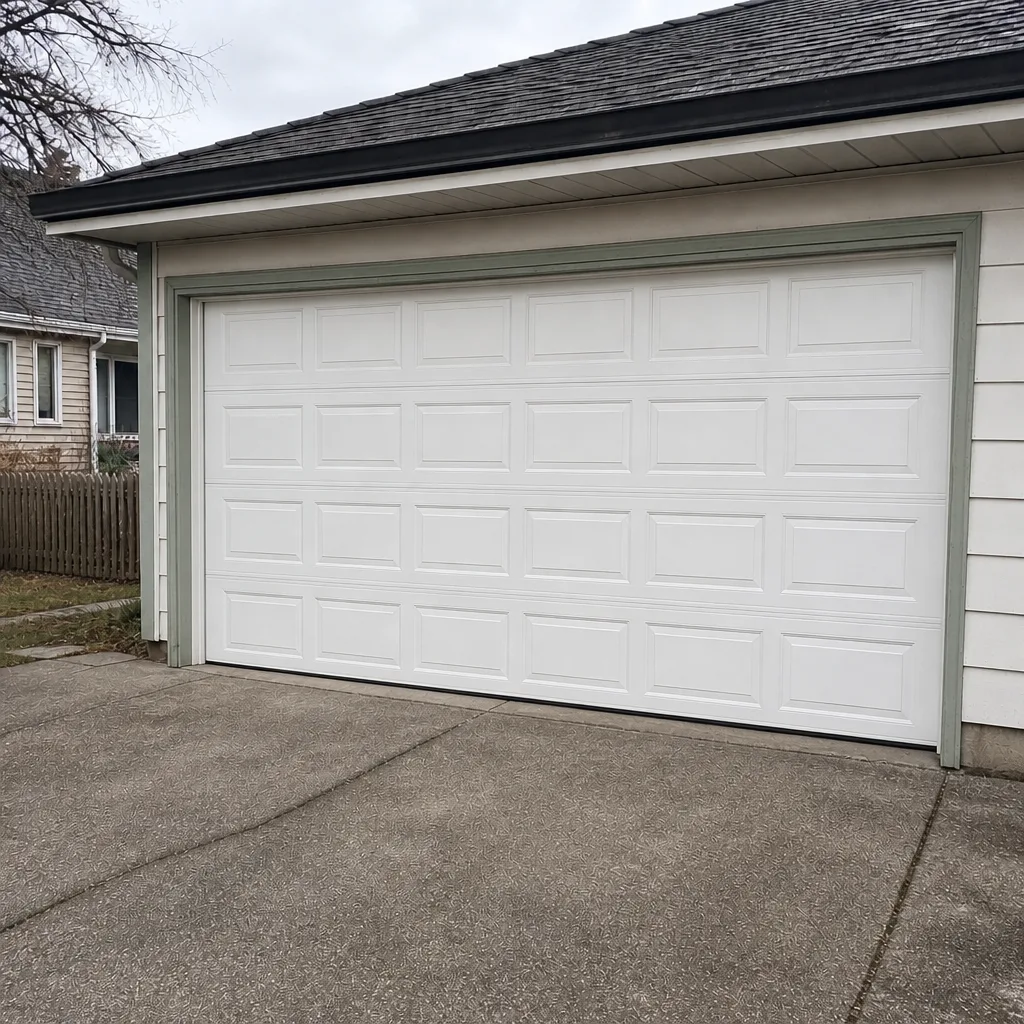
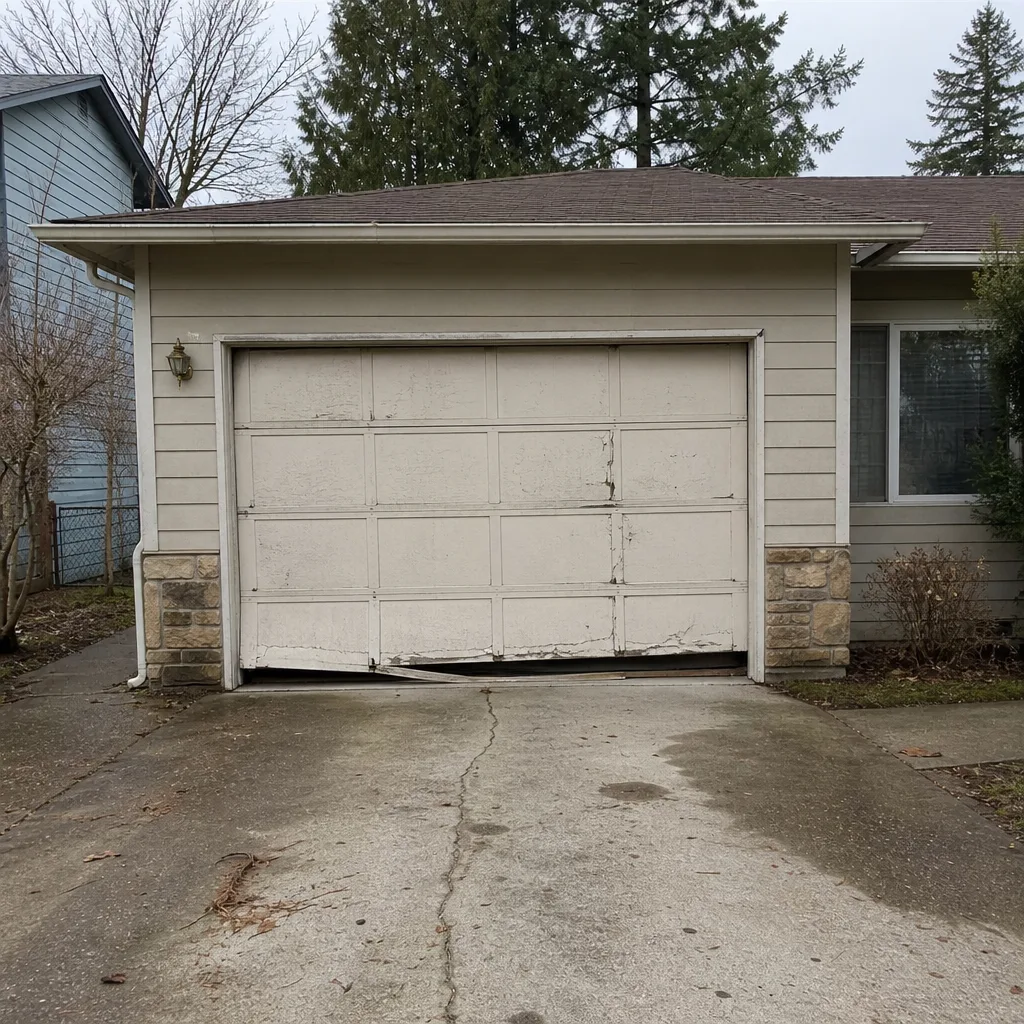
See the difference
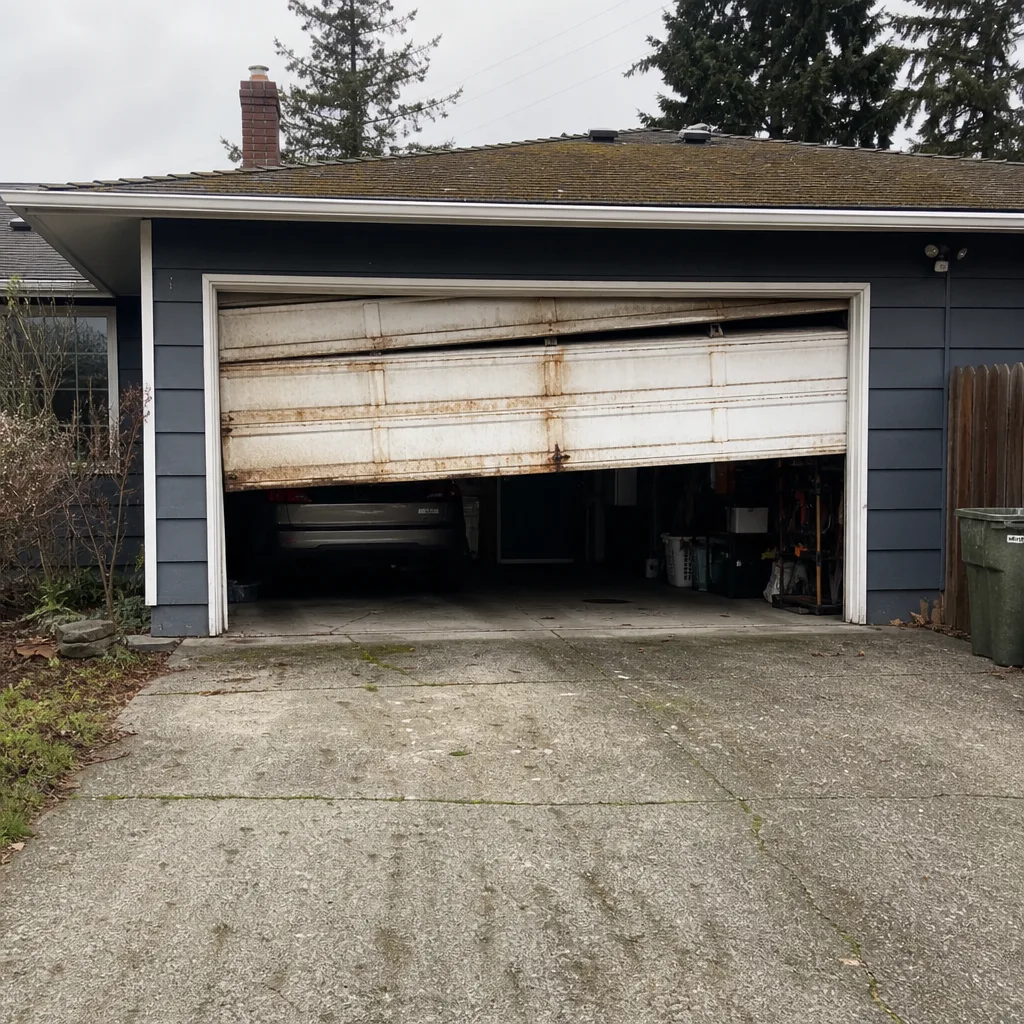 Before
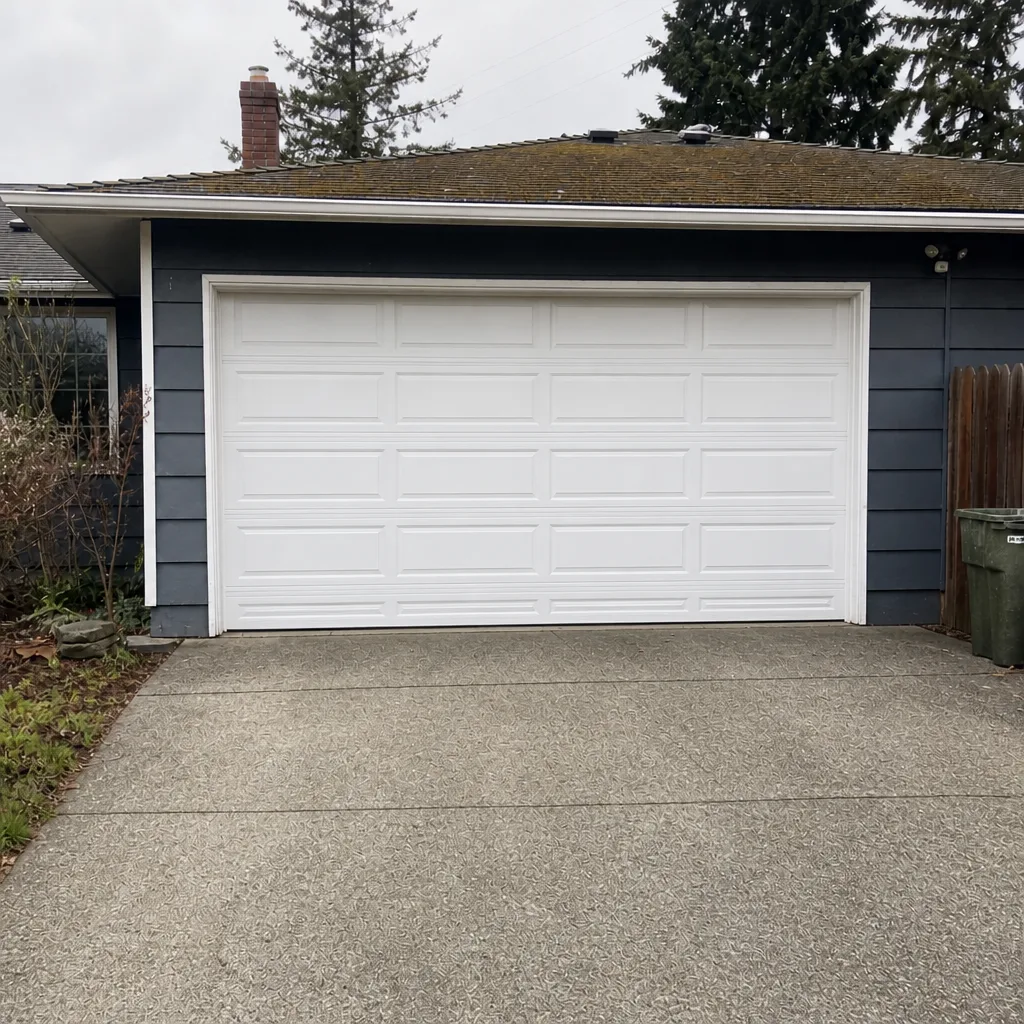 After
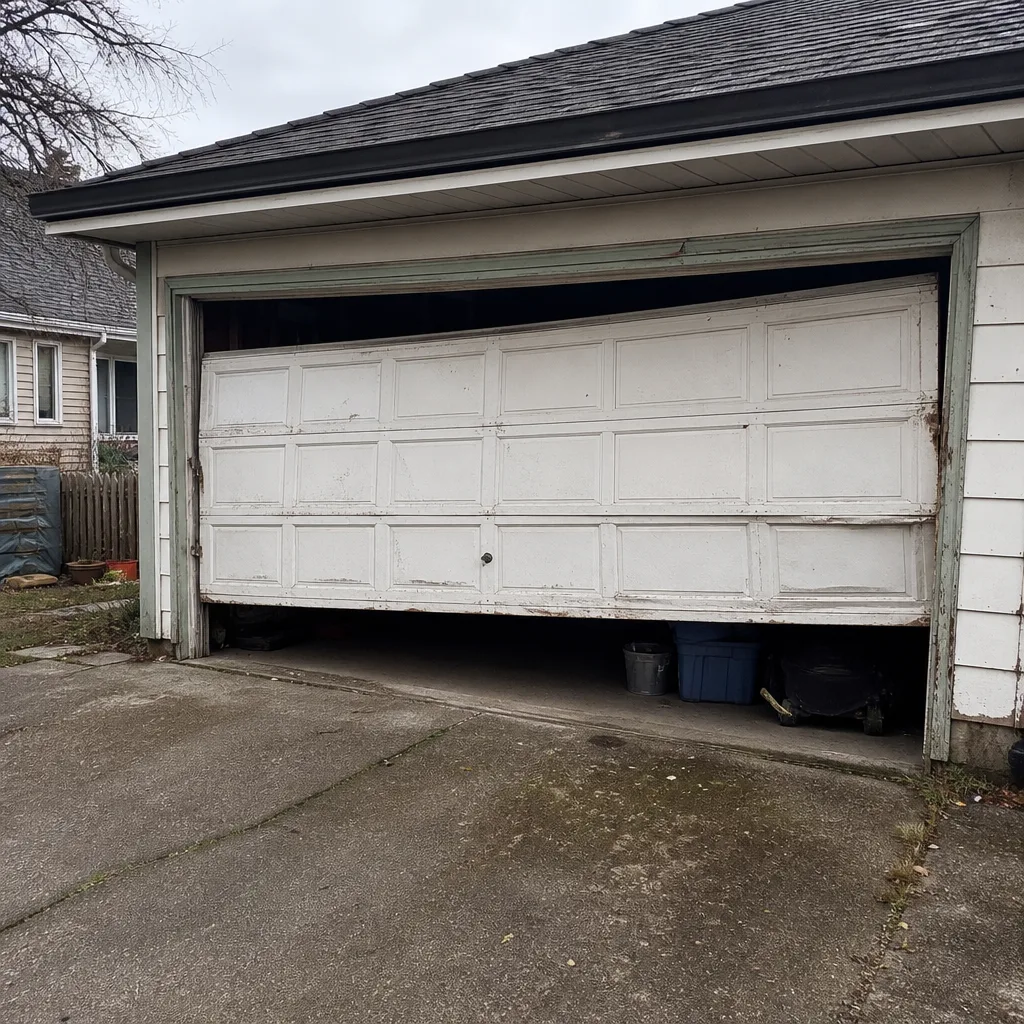 Before
 After
 Before
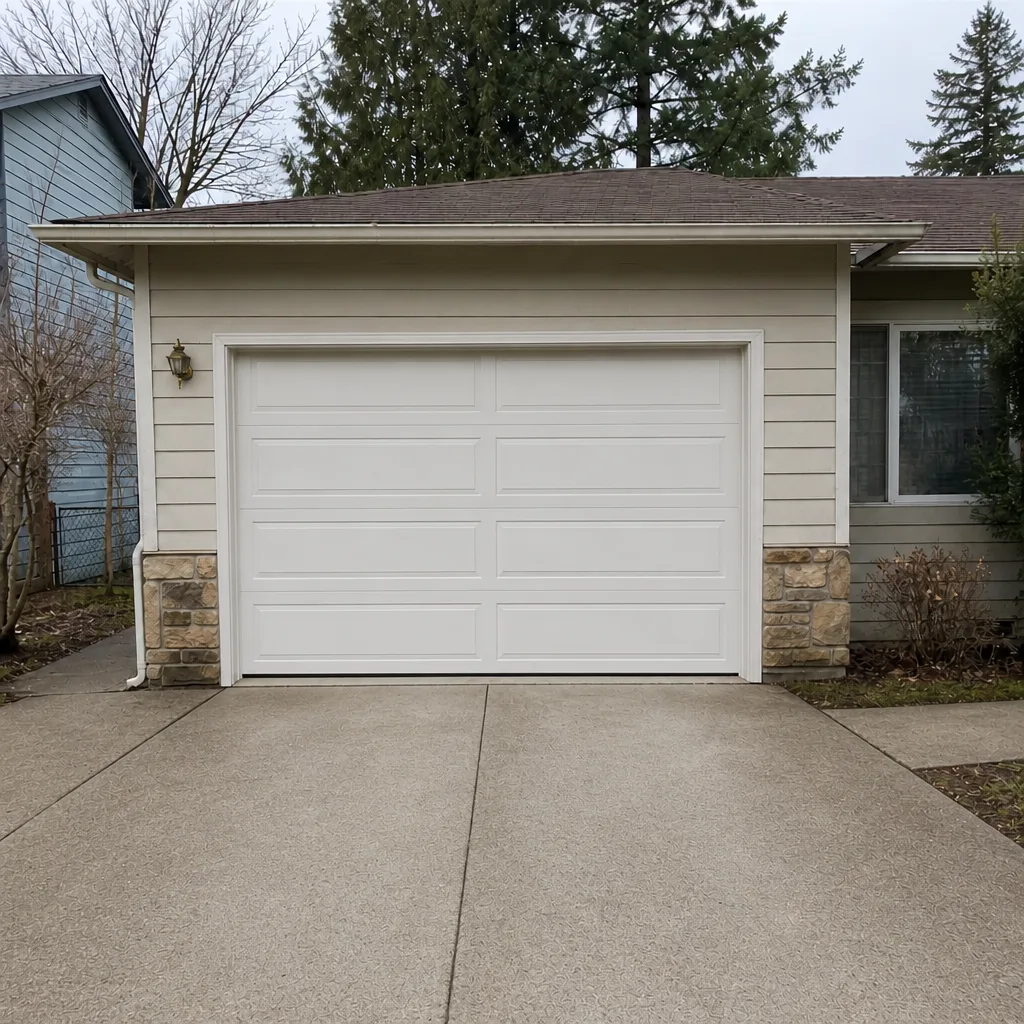 After
When to Call a Professional
Call a professional the moment the job touches stored energy – springs, cables, or a door off its track. Call when you can’t source the right part for your specific door and can’t confirm compatibility. Call when the door has been hit, has come off its rollers, or is being held up by something other than the mechanism. Call when you’re replacing the opener itself, and call when the installation involves a change to the electrical connection. And call when the door is trapping a car or leaving your home open, because emergency service is what we’re set up for and a door that’s stuck is a security problem within the hour.
Auburn Garage Door Repair Pros offers free estimates in Auburn – call (877) 792-5887. Our technicians have up to 10 years of experience and work on the LiftMaster, Chamberlain, Genie, Clopay, Amarr, Wayne Dalton, Craftsman, and Raynor equipment that dominates this area. The written estimate you receive before any work starts is the price. No surprises after the fact.
Frequently Asked Questions
No. Torsion and extension springs store enough energy to cause serious injury in a fraction of a second, and there’s no safe way to release or re-wind that energy without proper tools and training. Even an experienced DIY homeowner should not attempt this job. Call (877) 792-5887 for spring service in Auburn; estimates are free and the work is done to the specific spring spec for your door.
Lubrication, photo-eye sensor alignment, remote and keypad programming, and visual inspection are all safe to do yourself. Cleaning the tracks, checking the cables for fraying, and testing the auto-reverse are also in that list. Anything that touches a spring, a cable under tension, or a track under load is not. When you’re not sure which side of that line a task falls on, call us and ask – we’re happy to tell a homeowner when the job is a simple one they can do.
DIY work on non-warranty items like lubrication, sensors, and remote programming does not void your door or opener warranty. What does void the installation portion of a warranty is having an opener or door installed by an unlicensed installer, or modifying the installed system’s wiring. If you’re installing a new LiftMaster, Chamberlain, or Genie opener, have a licensed technician do it and handle the rest yourself. Call (877) 792-5887 for a free installation estimate in Auburn.
A single torsion spring replacement typically runs about $180 – $340 in the Auburn area, and a matched pair is usually replaced together, so a pair costs roughly twice the single-spring range. The written estimate you receive before any work starts is the price. Call (877) 792-5887 for an exact quote – estimates are free, and our technicians have the right spring spec for your door in hand.
Yes, emergency service is a core service we offer for doors that won’t move, won’t close, or are trapping a car. Call (877) 792-5887 and we’ll book the soonest available visit. We can’t promise a specific arrival time, but we do prioritize doors that are leaving a home open or trapping a vehicle. Don’t try to force the door up yourself while you wait – a stuck door under load is dangerous.
Download the manufacturer’s app, create an account, and follow the in-app pairing steps – those three steps are safe to do yourself and don’t affect your warranty. If your opener is older and needs an add-on hub, buy the manufacturer’s hub, not a third-party one. If you’re considering replacing the opener entirely, that installation belongs with a licensed technician. Call (877) 792-5887 for a free estimate on a new smart opener in Auburn.
The Bottom Line
The DIY vs professional question for a garage door comes down to two things: whether the task touches stored energy, and whether you can source the exact part for your specific door. Lubrication, sensor alignment, and remote programming are cheap, safe, and worth doing yourself – the parts cost roughly $8 – $65 and the job takes fifteen minutes. Springs, cables, and track work are a different category, where the cost of getting it wrong is measured in injury, not dollars. If you’re near the line and unsure, the answer is usually simpler than it feels: call a professional. The written estimate before work starts is the price, and the work is done to spec. We do this every day for Auburn homeowners and property managers across LiftMaster, Chamberlain, Genie, Clopay, Amarr, Wayne Dalton, Craftsman, and Raynor systems.
For a free estimate on any repair, opener, spring, or installation job in Auburn, call Auburn Garage Door Repair Pros at (877) 792-5887. One call, one company, from diagnosis through the completed job.
Written by the team at Auburn Garage Door Repair Pros.